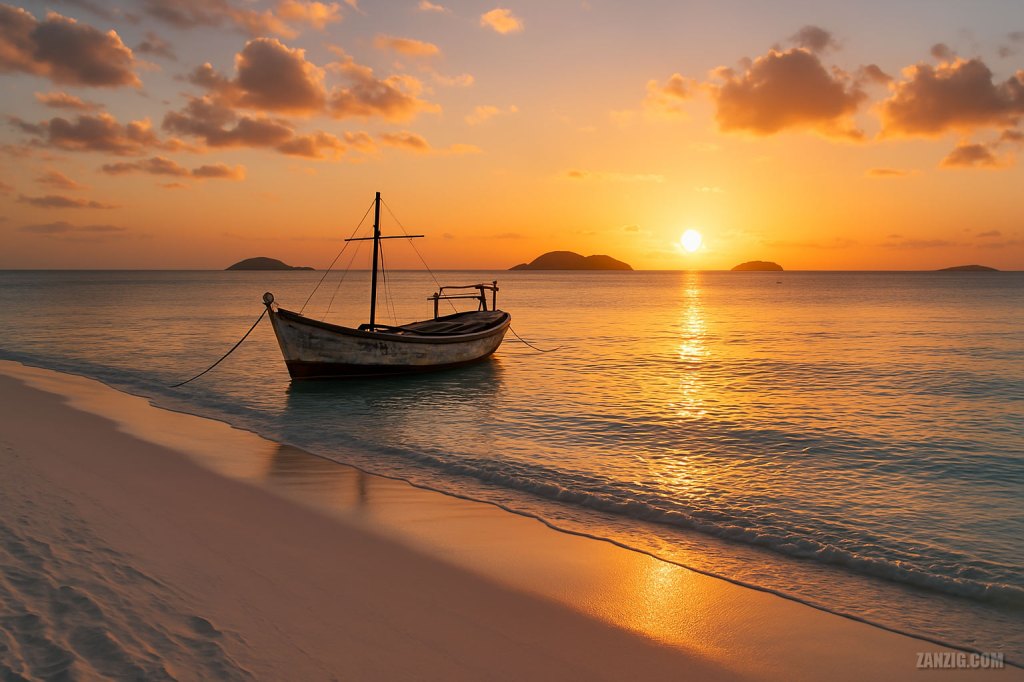
2025 – AI generated image showing a sunset at a beach with an old boat © Mark Zanzig/zanzig.com/Photo: ChatGPT
Generative AI in Photography
So far, I have tried to stay away from so-called generative AI, simply because I distrusted the machine. Whether text or images, the various algorithms seem to be biased in many ways, and it is not always clear where the machine sourced the information in the first place. Also, the copyright situation is still blurry, especially when AI generated content is very similar to existing copyrighted content. (For humans we’d call that plagiarism, but for machines?) This is even truer for images. Now, the machine does not have creativity on its own. It just takes content snippets it has found and assembles them to form supposedly new content. So, one could also say it regurgitates content at scale.
Admittedly, it works surprisingly well. The excercise with my Action Figure was really an eye opener. These action figures had hit a sweet spot with users and started trending overnight. Shortly after my post a friend came by and said: “Ah. Action figures. I’ve seen yours. Very nice. But you know what? I can’t endure them any longer. By now, everybody has created one. How boring is that? In fact, all AI generated content is boring in my view. There is no genuine creativity in these works. Any fool can take a couple of prompts, adapt them to their liking, throw them at the machine, and become a superstar (or action figure) within minutes.”
I agree.
However, there still remains the puzzle of how to deal with generative AI. I believe that ignorance won’t be an option. I see the first (really good) copywriters losing their well-paying clients because AI “can write copy as well – or even better.” (The same is true for professional translators, by the way.)
Will this phenomenon hit photographers as well?
Of course. Stock photography will be hit first, especially generic images that just look beautiful. Need a nice sunset at the beach? Use this prompt…
Create an image of a sunset at a clean white beach. There should be an old boat moored in the water a few meters from the beach. In the background, show some small islands.
…and you will get the image at the top of the post as a result. Spot-on result. Took three minutes or so. Free of charge. No copyright attached. At least, there is currently no legal framework that assigns the copyright. According to ChatGPT, I do have the permission to freely utilize the images generated by their service. Strictly speaking, and on the conservative side, I’d say that ChatGPT may hold the copyright on the image but gives me an unlimited licence to freely use the content, including commercial use.

What does this tell me about the value of such photos? Over night, they have become worthless. There is no point in taking photos and uploading them to a stock photo agency hoping that someone would actually buy it for a few Euros. Because the folks looking for such images want to save even these tiny amounts of money. There is zero willingness to pay. (And who can blame them? If some online service can generate the image in a few minutes, there is no value in this.) So, upon first glance it may look as if all photographic content is dead.
I believe this is not true. Some photo content will survive AI. The big question is: Which content will survive?
I think, the only commercial demand will be for authentic images, i.e. images showing a real place, situation, or activity. The (approximate) date, time, and location of the respective photos need to be provided by the photographer. This could be photos of real persons, weddings, sport events, press photography, product photography, and historic images. None of these can be replaced by generative AI because the images would lose their authenticity and would be “just fakes.” (Product photography may be different, because right now we see a lot of images rendered from 3D CAD files. These are not “the real thing”, though.)
Here is an example for a fake photo. Supposedly, it shows Kos Harbour in Greece. It’s 100% fake. Sure, upon the first glance, it could be true. There is the fortress. There are the boats. But the yachts are strangely remote. Closer inspection reveals that this cannot be true for several reasons.

By the way, here’s the prompt:
Create an image of a sunset over the harbour of Kos in Greece. There should be a few yachts and some fishing vessels moored to the pier. The camera should have a high position and the image should show a wider angle.
Also, high resolution images may remain valuable. Sure, AI can certainly create images of any resolution, but as of now, the image size, at least for users of the ChatGPT free service, seems to be limited to 1536 x 1024. I bet they are going to charge for high resolution images soon.
Maybe the photo business will change, and photographers will be able to build or contribute to curated “Prompt Libraries” for commercial photography. I guess this requires quick action. Commercial prompts may go the route of stock photos, recipes, music, or fonts – in each category there is an abundance of content today. Quality will be key for commercial success. Price points will remain low, though, as there will always be some good, cheap or free alternative prompt lurking around the corner.
That’s why I am so excited about analog photos from the past. In a world that soon will drown in AI image content, photos of the past will always be unique and as such valuable. Whether it’s a cabinet photo from 1887, a Carte de Visite from 1905, a photo print from the 1940s, or a negative from the 1980s – these are all 100% authentic. They may not be perfect, but their value lies in the fact that they cannot be re-created. They exist solely in this form (and their digitized twins.) All other forms probably have been lost over time or are still buried in some archive. Postcards are slightly different as their prints can exist in hundreds of copies. Still, they are at least authentic. Heck, even digital images of the past are more authentic than AI generated images.
We – as photographers – need to continue monitoring the developments in AI closely and use the technology whenever it provides business opportunities for us and benefits for our clients. Maybe there should be a distinct label (“Authentic Photo – Not created by AI”) that clarifies that an image is indeed an authentic photo?
Exciting times.
Design ideas
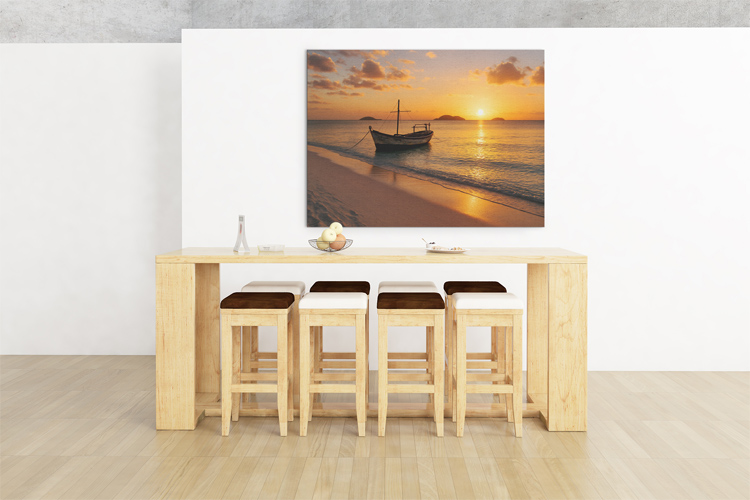

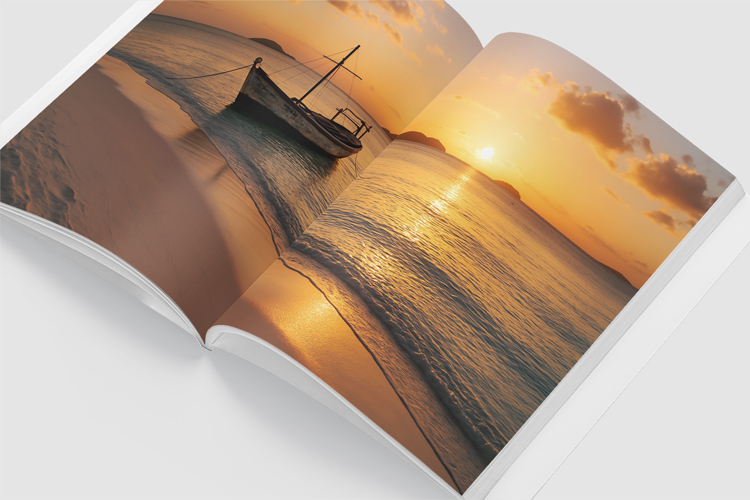
The high resolution image
| Creation Date | 12-APR-2025 |
| Creator | Mark Zanzig, based on an AI generated image by ChatGPT |
| Location | Munich, Germany |
| Digital Image Source | ChatGPT |
| Digital Image Source Format | JPEG, 24 bits/pixel, sRGB |
| Edited Image Format | JPEG, 24 bits/pixel, sRGB |
| Edited Image Dimensions | 1536 x 1024 Pixels |
| Copyright | © Mark Zanzig/zanzig.com/Photo: ChatGPT |
 Zanzig.com Photo Hub
16 Comments