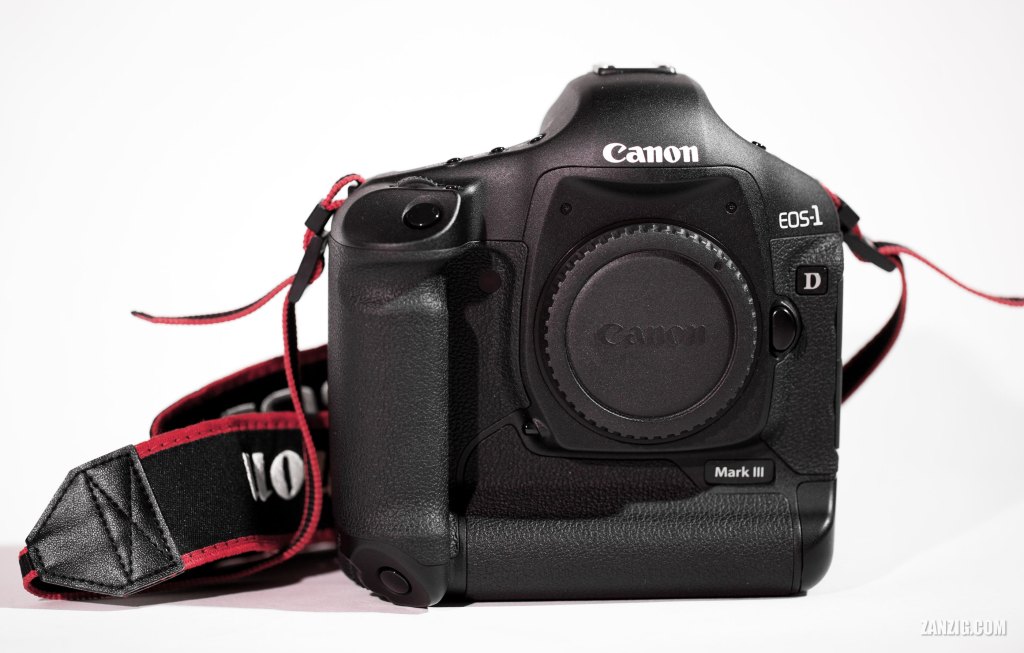
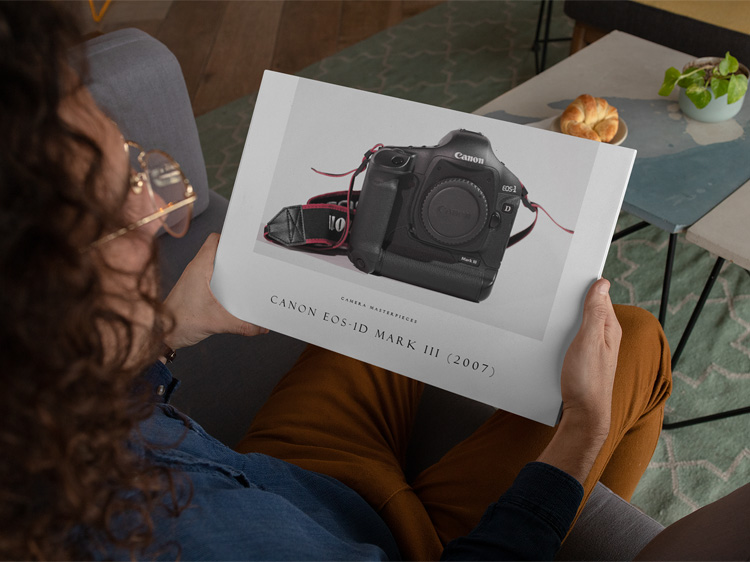
OCTOBER 2011 – A Canon EOS 1D Mark III camera body on a white background. © Mark Zanzig/zanzig.com
The Fast Flagship Of Its Time
Like many of my readers, I grew up with analog cameras. My mother owned a Kodak Retinette 1B point-and-shoot camera, and I remember taking my first shots with that. Around 1982 she upgraded to a Canon AE-1 Program which really got me hooked to photography. For more than two decades I kept shooting with the Canon AE-1 Program. I knew the camera, I liked the camera, and I could get the results I wanted from the camera.
In 2000/2001 I took my first steps towards digital photography with a Kodak DC4800 Zoom Digital – one of the first really good digital point-and-shoot cameras. I was thrilled but remained for a while with analog bodies. Five years later I stood in a photo store in Vienna, Austria, purchasing a brand new Canon 1Ds mark II, the flagship of Canon’s DSLR product line. Its 16 megapixels were exceeding the quality of slide film and enabled a fully digital workflow. The price? Astronomical! Me? Super excited!
But – for my wedding photography business I needed redundancy. As much as I liked the new technology, I did not really trust it. A camera body could fail. A battery could die. Memory cards could refuse to work. Heck, anything could happen. And I did not want to expose my couples to that risk and be without decent photos of one of their most important days in their lives.
But the truth is – I couldn’t afford another 1Ds mark II. So I opted for the 1D mark II N which had the same form factor and usability and almost the same technology. The only tangible difference was its smaller sensor (8 megapixel instead of 16). That made it much faster though. That’s why Canon positioned the 1D Mark II N as professional body for sports photographers. I loved the camera but figured out soon that the 8 megapixels of the 1D Mark II N were indeed too small for my needs. It required me to execute my images with utmost precision. There was just very little wiggle room in terms of cropping which could easily get an 8 megapixel image down to 6 megapixels or even less. Not enough for couples who wanted large poster prints.
So, when Canon released the EOS 1D mark III, I was super excited. In principle, it was a 1D mark II N with a bigger sensor (10 instead of 8 megapixels). This would enable me to shoot with a bit leeway, and cropping an image resulted in maybe 8 megapixels which was still good enough.
That’s how I ended up with the 1D mark III. In fact, it was so good that I took it on our trip to South Africa and Botsuana in 2011. All DSLR images from that trip were shot with that body. I can honestly say that this was – for me – the perfect camera. Well, almost. Superb image quality, fast, excellent form factor, reliable, sturdy, and affordable.
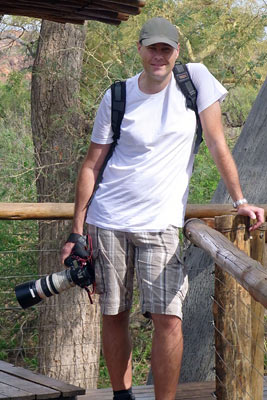
The only thing that bugged me (a bit) was the size of the sensor. 10 megapixels were okay, yes, but if I could get 16 megapixels from the same body, I’d switch in no time. This happened when Canon released the 1D mark IV. I did not think twice and bought two of these fine bodies which I still own and use today.
Having said that, I’d go back to a 1D mark III or even the 1D mark II N if I had to. These are still excellent cameras for most photographic challenges. At the time of writing, used bodies were sold for 300 to 500 Euros on eBay Germany. These could be good deals if they come with plenty of accessories and/or low clicks.
Please see some of the stunning photos I shot with this body.
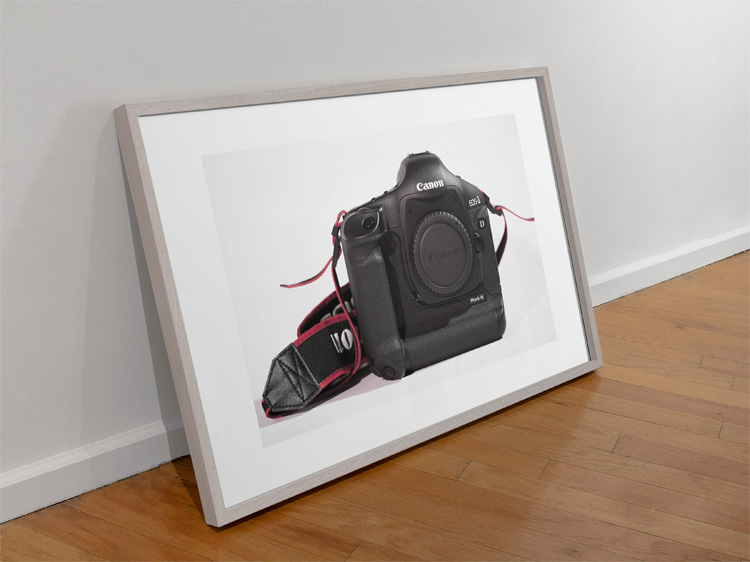
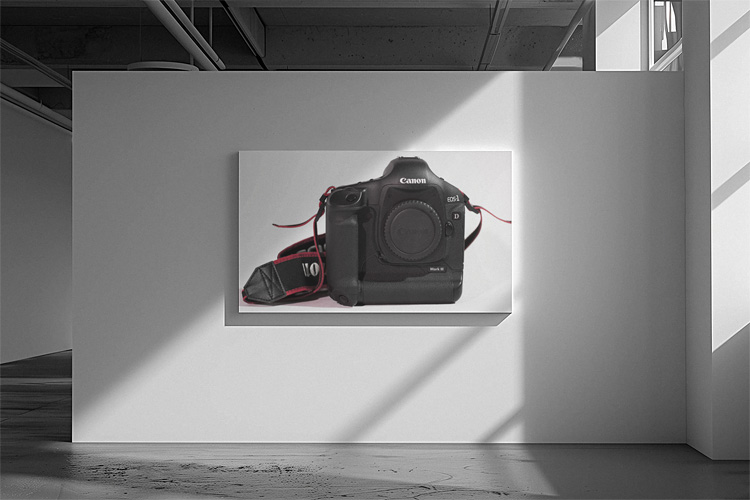
Design ideas
The high resolution image
| Capture Date & Time | 25-OCT-2011, 16:45 |
| Location | Unterhaching, Germany |
| Camera | Canon EOS-1Ds Mark III |
| Lens | Canon EF100mm f/2.8L Macro IS USM |
| ISO | 200 |
| Exposure | 1/160 sec at f/2.8 |
| Digital Image Source Format | Canon Camera RAW (CR2) |
| Edited Image Format | JPEG, 24 bits/pixel, sRGB |
| Edited Image Dimensions | 4776 x 3050 Pixels |
| Copyright | © by Mark Zanzig/zanzig.com |
 Zanzig.com Photo Hub